At SAF Tehnika, we don't just speculate on how our wireless networks perform: we measure it. And just as importantly, we're transparent about the real-world trade-offs.
We teamed up with Riga Technical University (RTU) to deploy around 3,000 wireless sensors across campus buildings and dormitories, creating one of the largest active mioty® protocol networks in operation today.
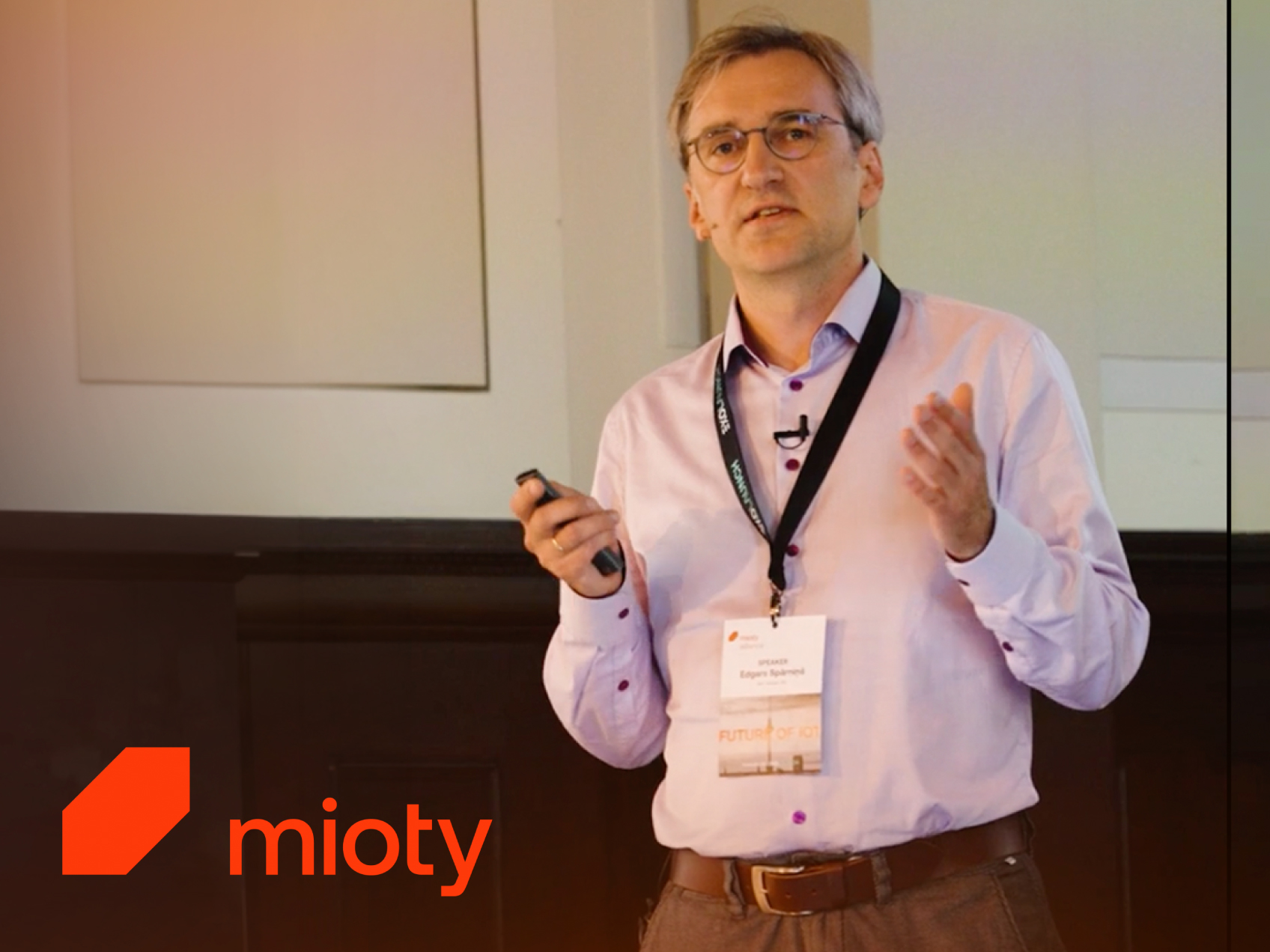
At the mioty® Global Summit 2026 in Berlin, our project manager Dr. Edgars Spārniņš took the stage to share the quantitative proof, and the real engineering compromises, behind the rollout.
Key Takeaways
Real Data, Real Results: Live CO₂, temperature, and humidity data now feeds RTU's machine learning research and helps the university optimize energy efficiency and indoor climate campus-wide.
The Pilot Comparison: We ran mioty® against our standard Aranet radio protocol head to head, close to 500 sensors on each side, in matching dorm buildings. Under identical conditions, mioty® delivered orders of magnitude lower packet loss.
The Honest Trade-Off: mioty® let us scale with far fewer gateways, but the protocol draws more power. In this deployment, mioty sensors saw a shorter battery life than our standard Aranet radio sensors running the same hardware.
This is what we mean by proving performance rather than assuming it. The RTU deployment gave us real numbers, not projections, and a clear picture of what mioty® delivers and what it costs to get there. That's the kind of data we want behind every decision we make, and the kind we're glad to share.
Watch Dr. Spārniņš's full presentation