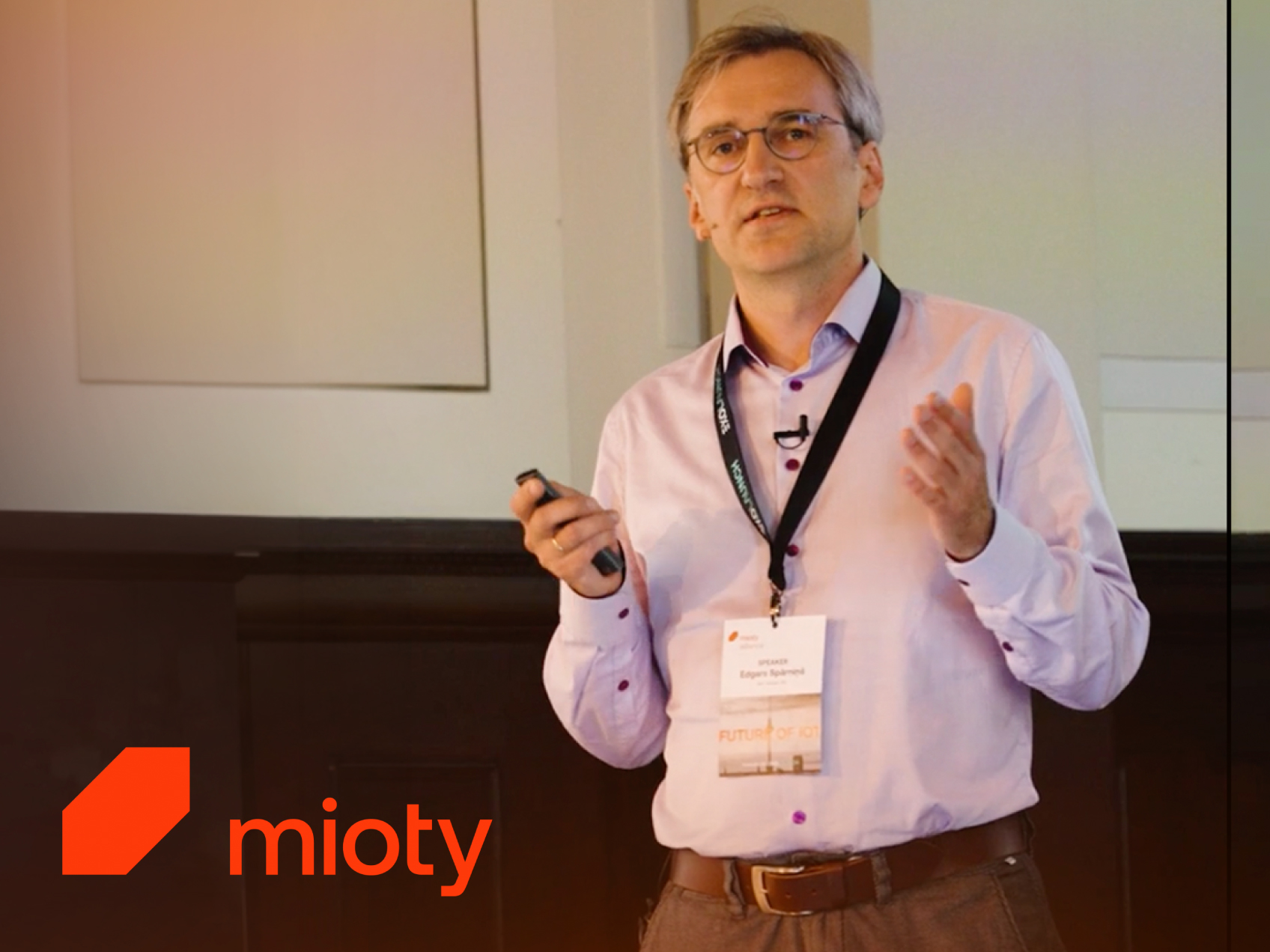
Most engineering systems begin with research and theoretical calculations, but the real learning starts when solutions run in real life. As the mioty sensor network across Riga Technical University (RTU) begins operating at scale, the focus is shifting from deployment to everyday use, how continuous data can support practical decisions across campus.
During a recent discussion with RTU staff, the teams explored how continuous, real time environmental data can support day to day decisions, from indoor climate monitoring to more efficient building management. With ongoing CO2, temperature, and humidity measurements, the network helps reveal how spaces are actually used over time and where targeted improvements can have the biggest impact.
For RTU, the initiative is not only a technology rollout, it is also a practical platform for maintenance, research, and education. It gives students and researchers access to large scale, real world datasets, and connects academic work with live infrastructure, supporting long term sustainability goals through data driven decision making.
The research project is titled: “Validation of data-driven energy efficiency algorithms and analysis of data transmission quality in high-density sensor networks.” It is implemented by RTU and SAF Tehnika, with support from the mioty Alliance, and is designed to validate mioty technology in a sensor dense, real world environment.
The project is supported under the Latvian Recovery and Resilience Facility framework, Project No. 5.1.1.2.i.0/2/24/A/CFLA/006.